
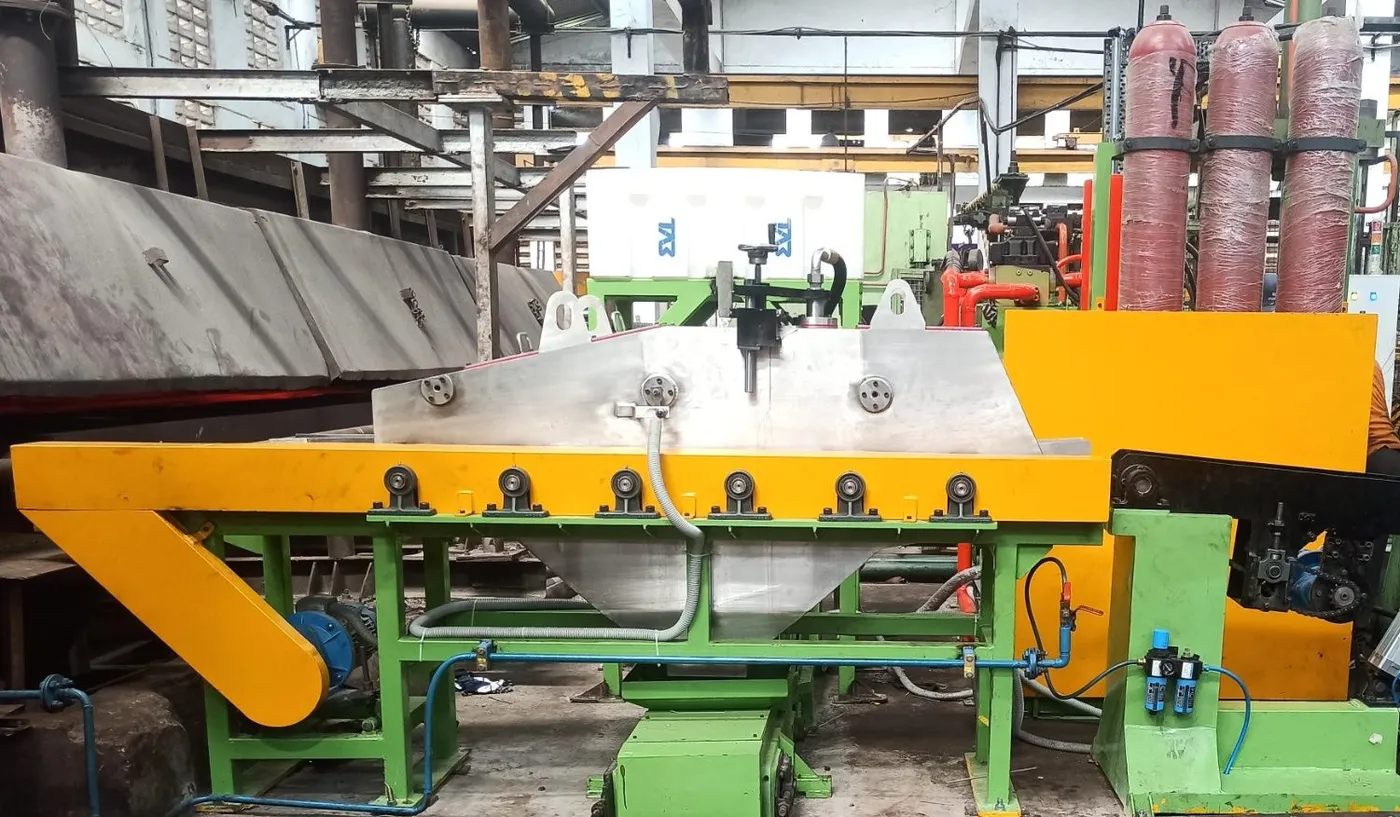
A spring's life is decided at its surface. Scale left on the leaf when it is rolled quietly takes that life away, long before the spring reaches the vehicle.
That is why a descaler is not a cleaning machine. It is a quality machine, and it saves the life of your spring.
What scale does to a spring
Scale is the oxide layer that forms on steel as soon as it is heated. If it is still on the surface when the steel is rolled, forged or bent, it is formed into the part:
- Dimensions. The part is rolled or forged to size with the scale on it. When the scale comes off later, during heat treatment or shot blasting, the part is undersize by that thickness. In our experience, scale can reach up to 1 mm per side. On a leaf spring, whose rate is highly sensitive to thickness, that is a serious loss of accuracy.
- Finish and fatigue. Rolled-in scale leaves pits and seams in the surface. On a spring, surface defects are exactly where fatigue cracks start.
- Shot and stress peening. Peening puts a shallow compressive layer into the spring surface, and that layer carries much of its fatigue life. On a scaled surface, the shot's energy goes into breaking the scale instead of working the steel, and rolled-in scale pits stay inside the layer as crack starters. You pay for peening, and the scale takes the benefit away: the effect is compromised, and in the worst case largely lost.
- Tool consumption. Scale is hard and abrasive. Forged parts that still carry it wear out cutting tools faster when they are machined, and the same scale wears the forging dies.
Take the scale off immediately before forming, with water alone and no chemicals, and you protect all of them: the size, the surface, the peening and the life of the spring.
Better quality, and less cost to run
An R-Tech descaler works only when it is needed. High-pressure water is delivered only when a billet or leaf is present, detected by sensors, and the system never runs idle. Compared with a pump system that runs continuously:
- Much lower power and water consumption, because nothing runs between parts.
- Less maintenance and higher uptime, because intermittent duty means less wear on pumps, seals and valves, fewer breakdowns and fewer spares.
- Compact and easy to retrofit, with no large pump house and less piping, so it fits into existing lines with minimal disruption.
One principle, three duties
At R-Tech we build water-jet descalers for three different duties. In all three, high-pressure water from specially imported TiC nozzles strips the scale just ahead of the forming step. What changes is the part, the pressure and the size of the machine.
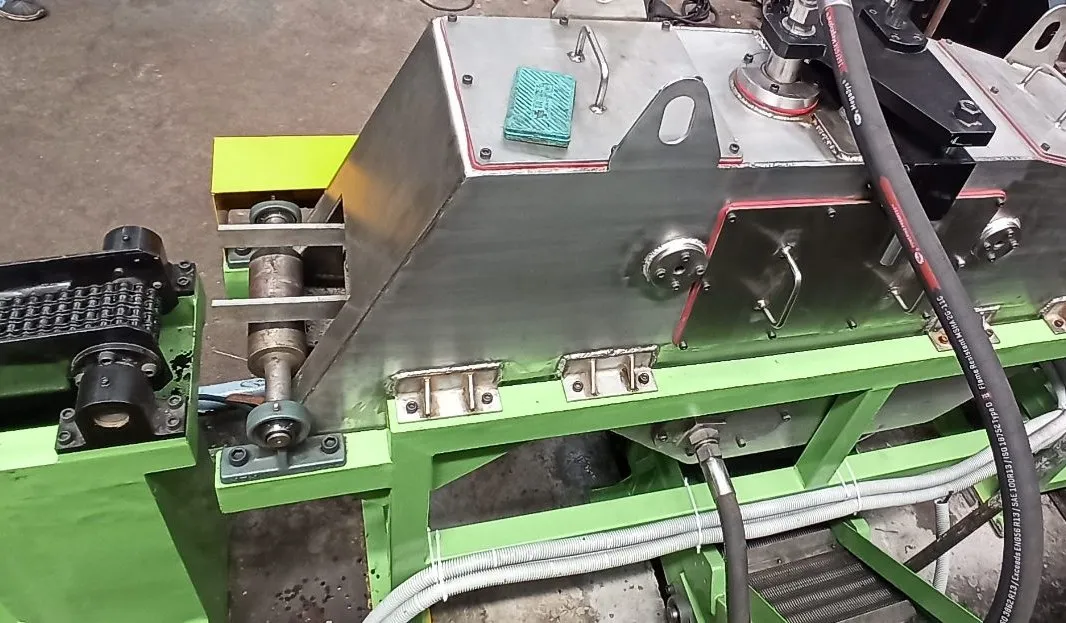
Leaf spring rolling cells. The leaf is descaled at 300 bar immediately before parabolic rolling, with intermittent descaling to suit the rolling rhythm. This machine is R-Tech's own development.
Forge shops. Billets from Ø20 to 80 mm, and up to Ø200 / 200 mm square, are descaled at 17–35 bar, in a compact unit with a stainless-steel body and conveyor.
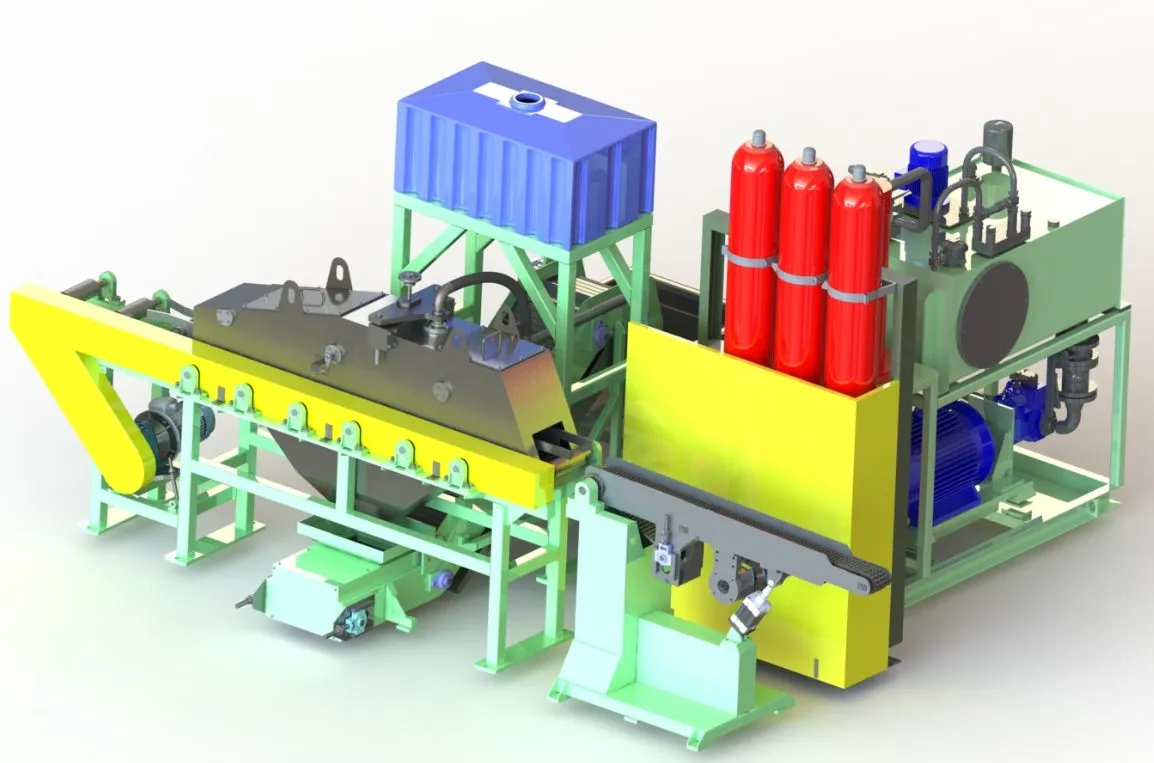
Steel rolling mills. Billets up to 250 × 250 mm and 1–12 m long, with hydraulic controls and actuators.
Don't let scale decide your spring's life
Each descaler is configured to the customer's part, temperature and line speed, and scale removal is confirmed in trials on the customer's own parts.
Planning a new rolling cell or forging line, or upgrading one? Tell us your part size, temperature and line speed, and we will configure the descaler around it.
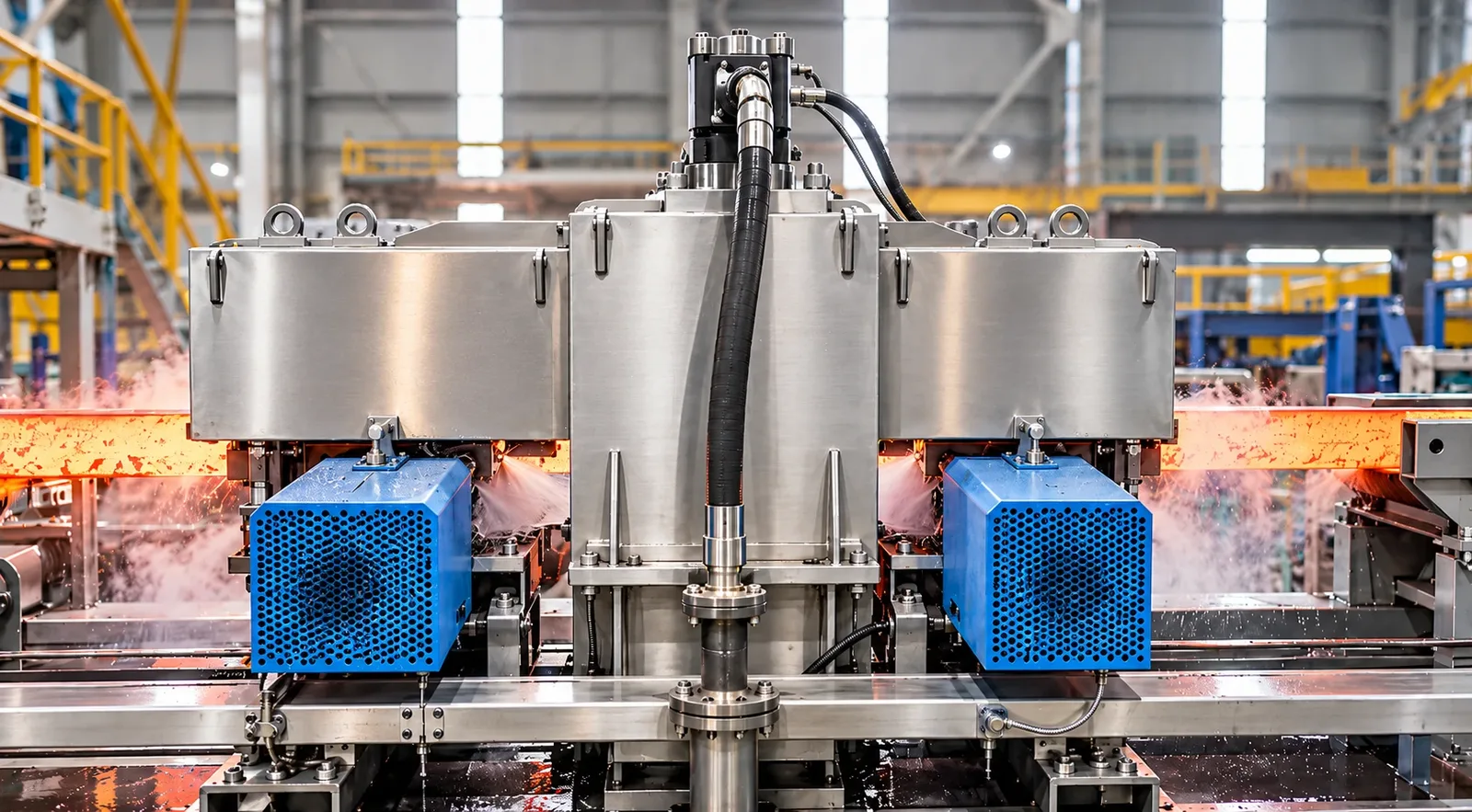
Image for pictorial purpose only.