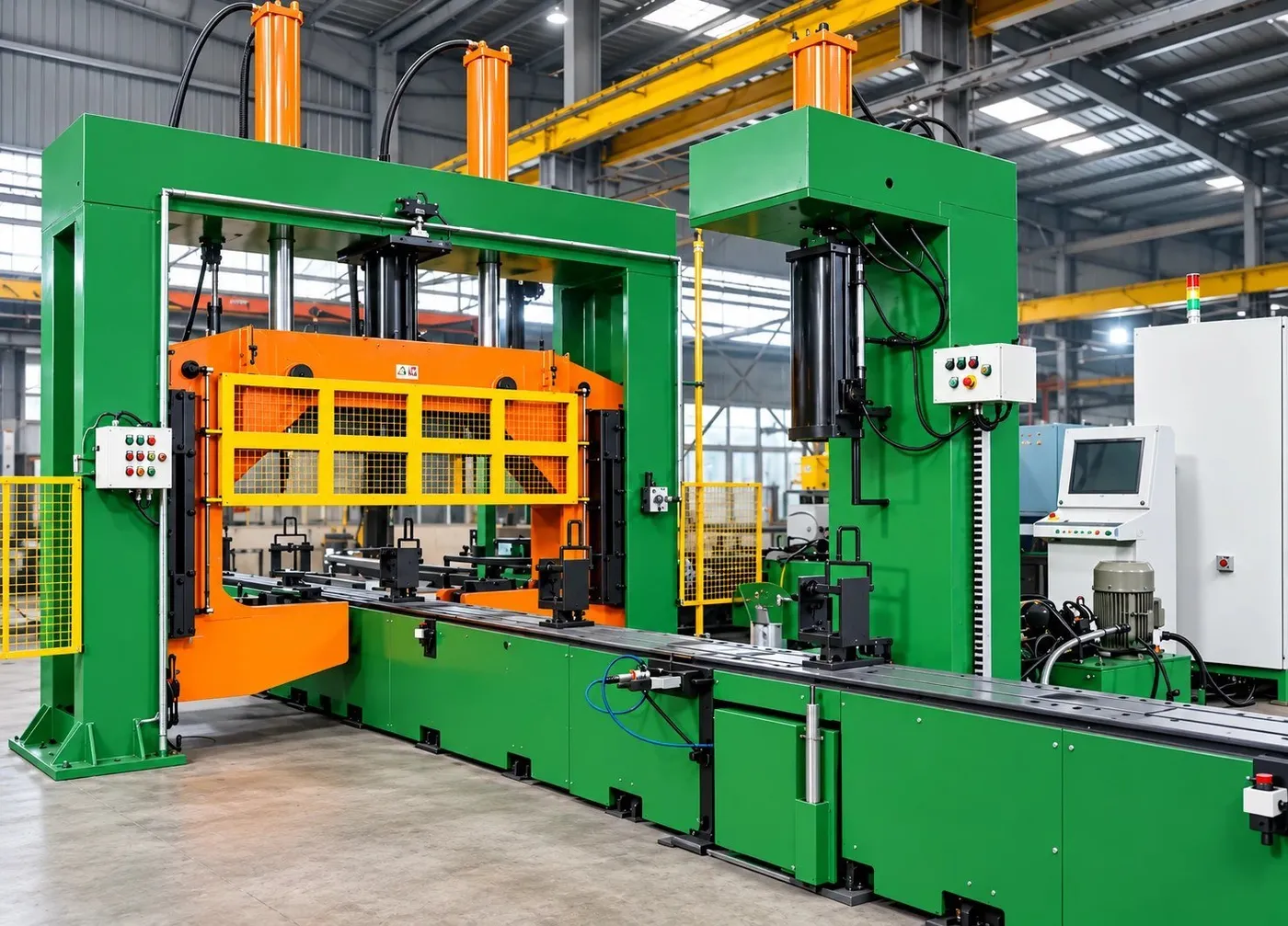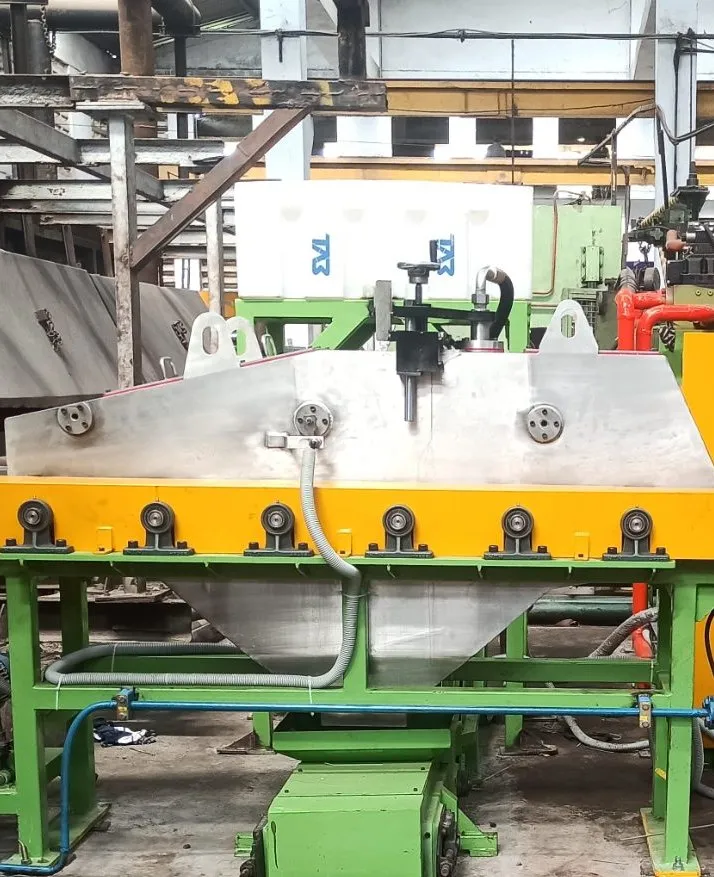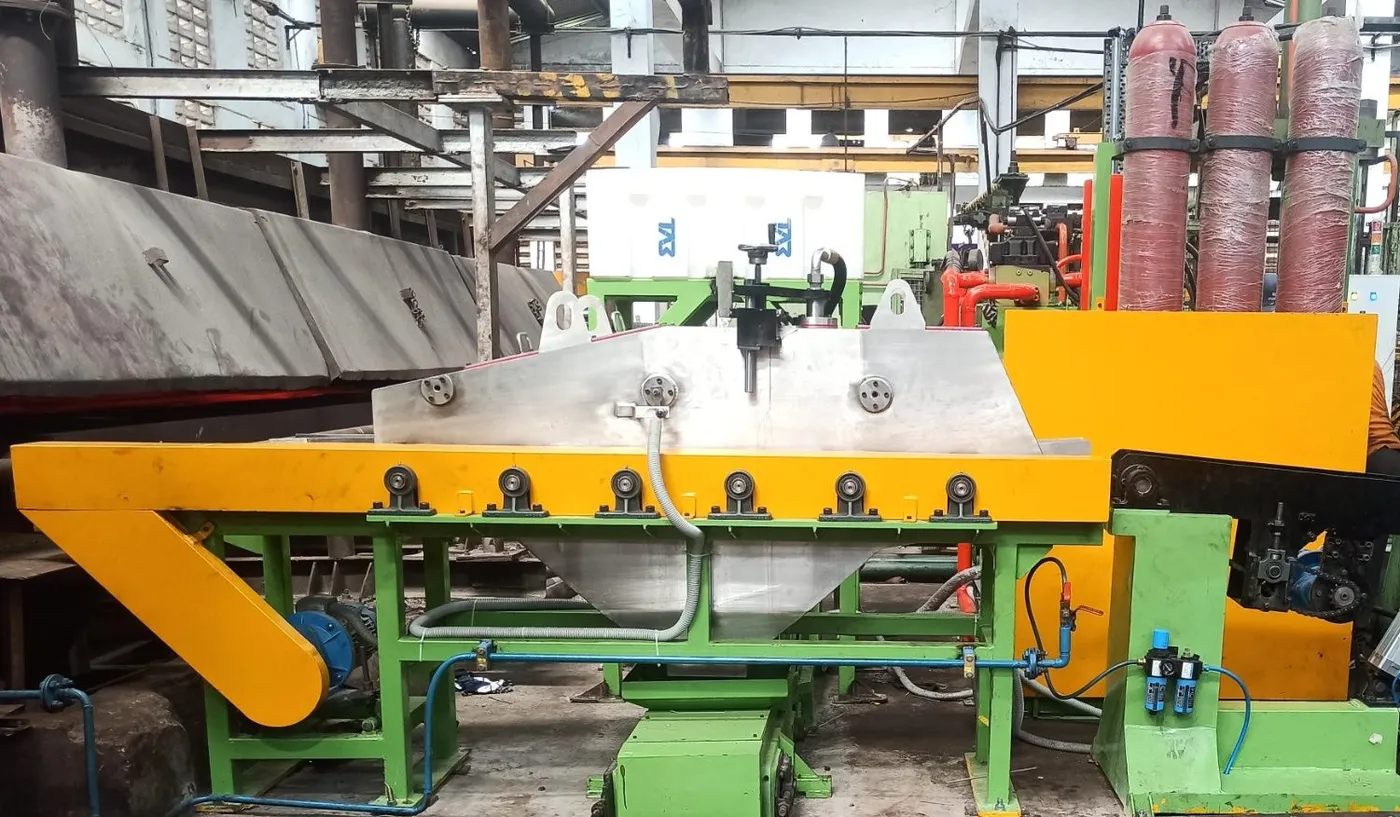
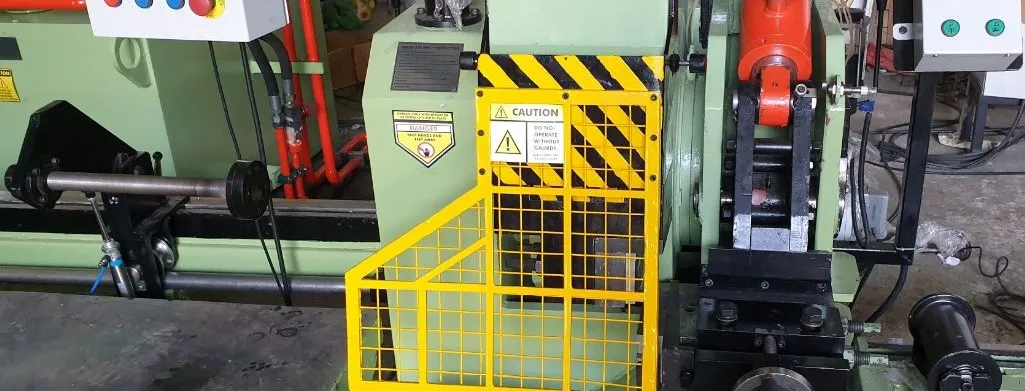
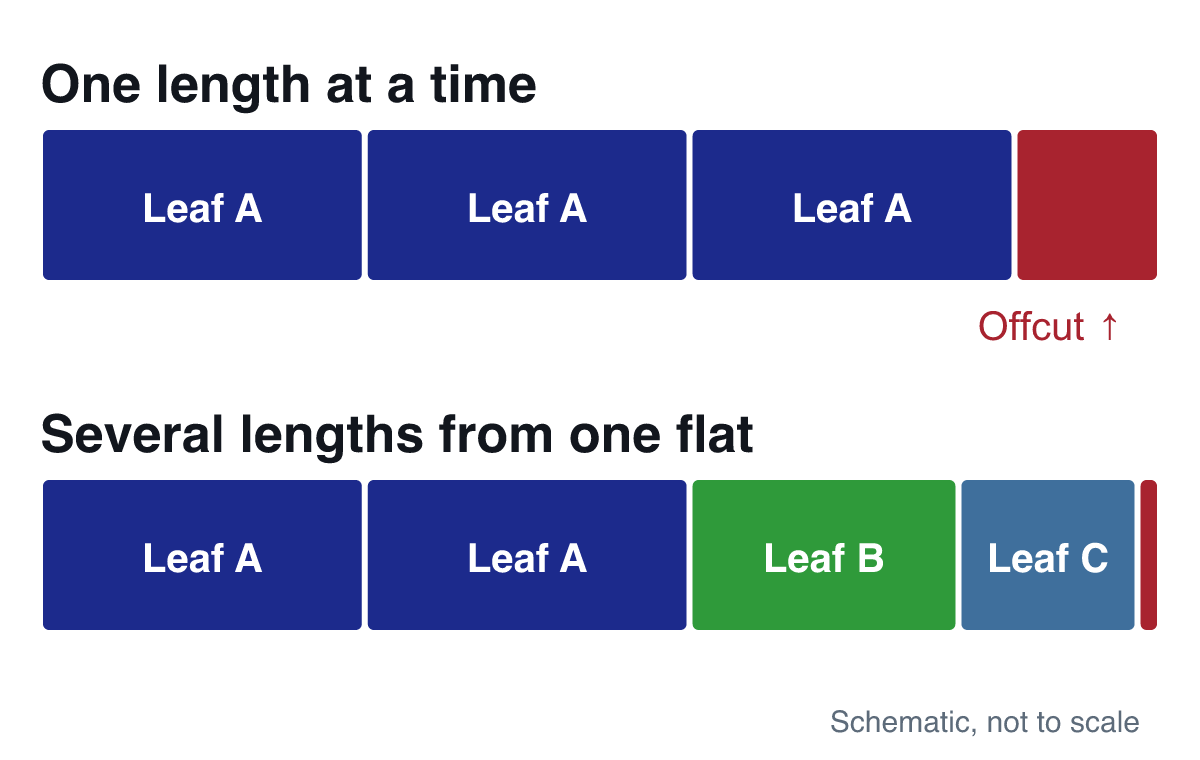
Flats reach the shear in lengths that vary. Your drawing calls for several leaf lengths. How those lengths are laid out on each flat decides how much of the steel you bought becomes springs, and how much becomes offcut.
Steel you paid for should become springs, not offcut.
What goes wrong at a manually set shear
- Offcut at the end of every flat: cut one length at a time, and what is left at the end of each flat is often too short for that leaf. It goes to scrap.
- Length errors at the stop: a manual length stop is set by hand for every length. A short leaf cannot be lengthened, so it is scrap; a long one is cut again.
- A flat that lifts at the cut: the end is not square, and the blade edge takes the load.
- Slow changeovers and heavy handling: every new length means resetting the stop; flats moved by hand set the pace.
How R-Tech automates the shear
- Feeds flats automatically from the raw-material bundle table.
- Measures the actual length of each flat.
- Decides the shearing pattern for that flat: which leaf lengths, and how many of each, varied flat by flat to reduce scrap. A shorter leaf uses the steel a longer one would leave behind.
- Positions every cut by servo, in place of a hand-set stop. The program sets each length, not the operator.
- Clamps the flat hydraulically through the cut, for a square end and improved blade life.
- Keeps blade cost low: every R-Tech blade has four cutting edges, with its material and heat treatment chosen for the duty.
- PLC/HMI with recipes, leaf count and production data.
Why it matters for your spring
Leaf length is a drawing dimension. It sets where the leaf ends in the pack and where the eye is formed on the main leaf. A repeatable cut length is the first step to a repeatable spring.
And every offcut is steel bought as spring steel and sold as scrap. Deciding the pattern for each flat before it is cut is how you keep more of it in the spring.
The complete SPVC cell, from one supplier
Shearing is the first operation of the cold working (SPVC) cell. R-Tech designs and supplies the complete integrated cell:
- Flat feeding, length measurement and pattern decision
- Servo positioner and hydraulic clamping
- A closed-frame hydraulic shearing press with R-Tech tooling and blades
- A servo-positioned conveyor to centre-hole punching
- The centre-hole punching tool and press
- Where needed, a conveyor to V-cutting and the V-cutting hydraulic press
- Sorting and stacking automation
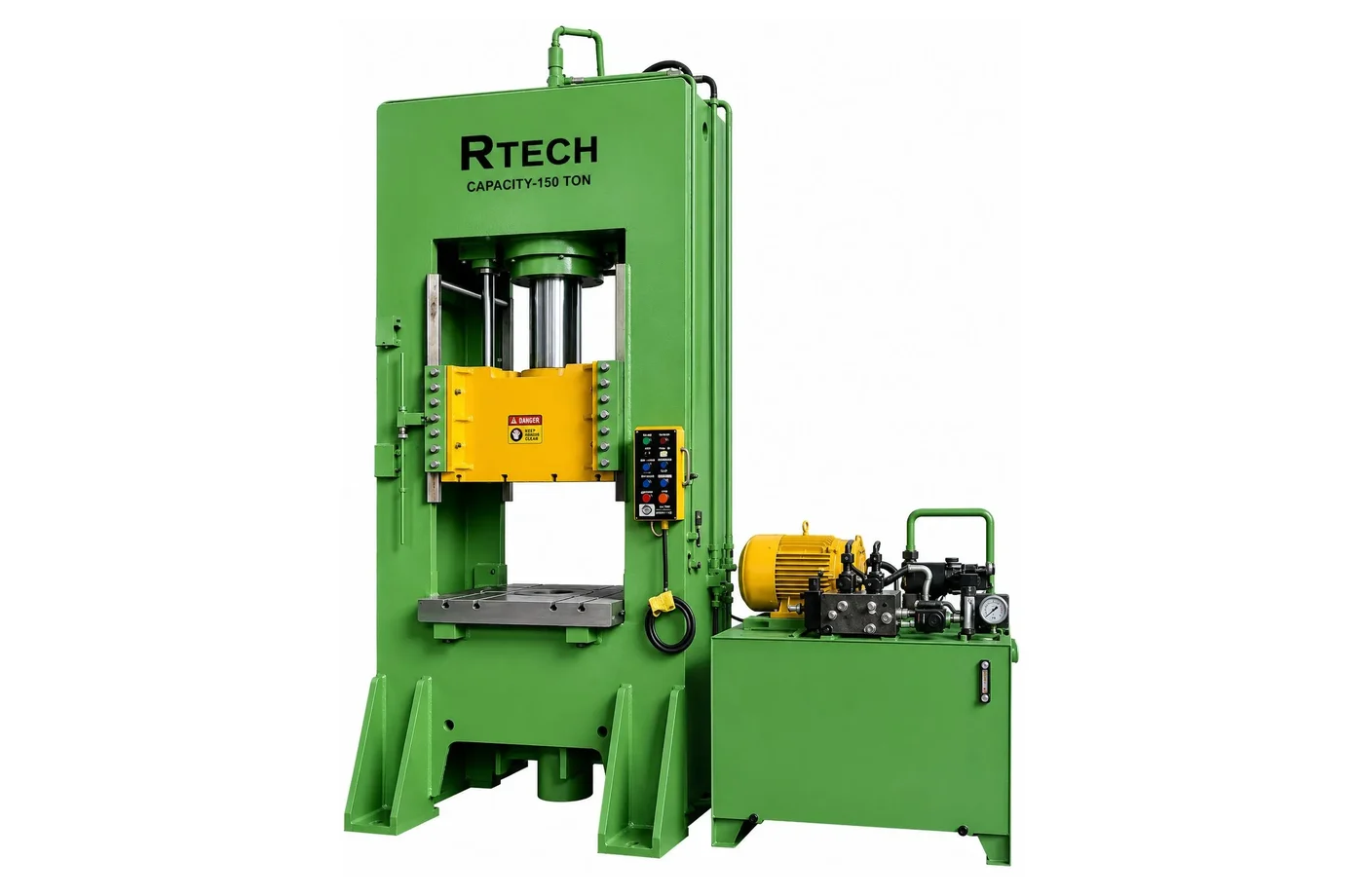
Or any part of it on its own: blades, press tools, a single machine, or automation for the line you already run.
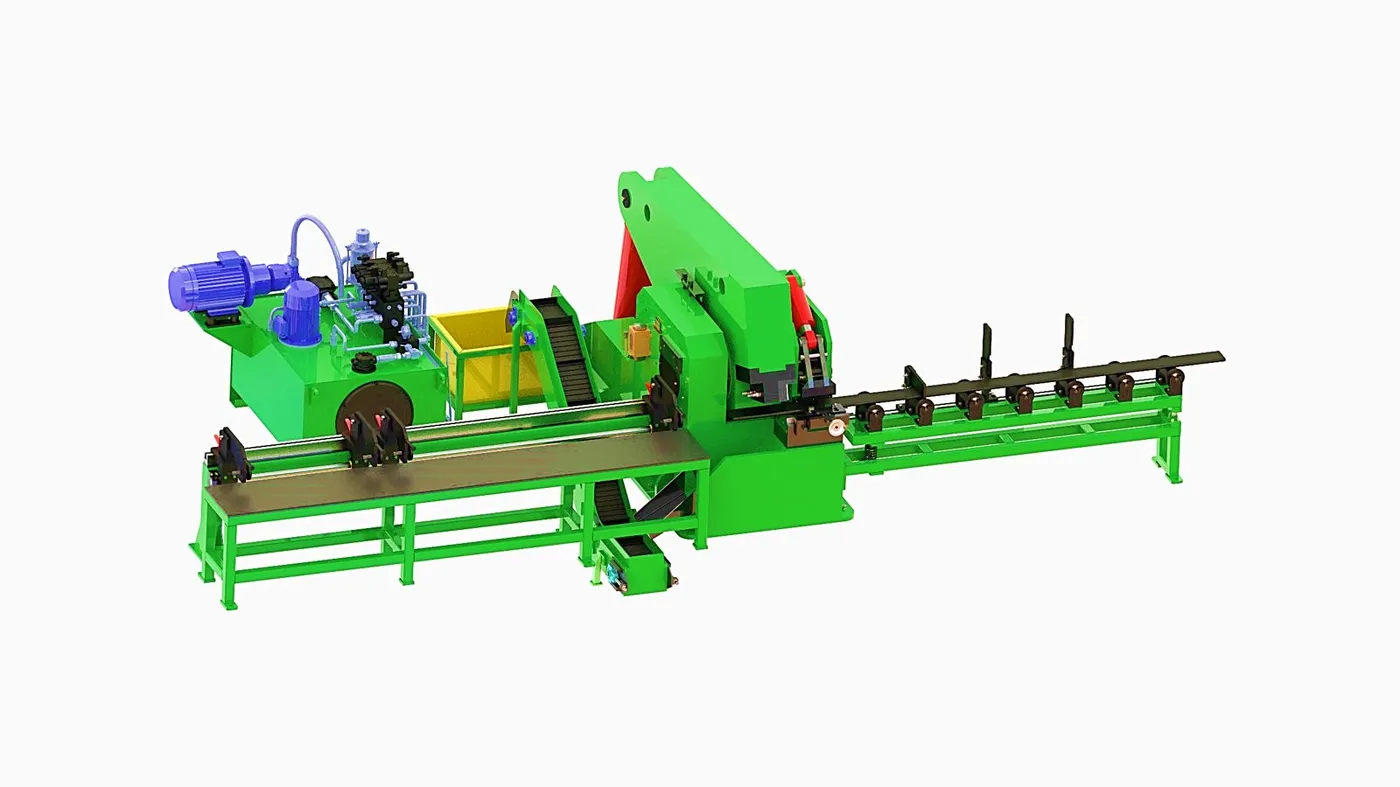
One answer for machines, tooling, automation, scrap reduction and the consumable tools that support them. For heavy alloy sections, R-Tech's 250 T heavy-duty alligator shear cuts 100 × 40 mm alloy steel of 800 MPa shear strength at 300 BHN.
Plan the flat before you cut it.
Contact us to plan your SPVC cell and its automation, and for a machine quote. Send your leaf lengths and quantities, flat section (width and thickness) and material grade, the lengths your flats arrive in, and your target output.
Images for pictorial purpose only; actual machine may vary. 3D layout shown for illustration.